
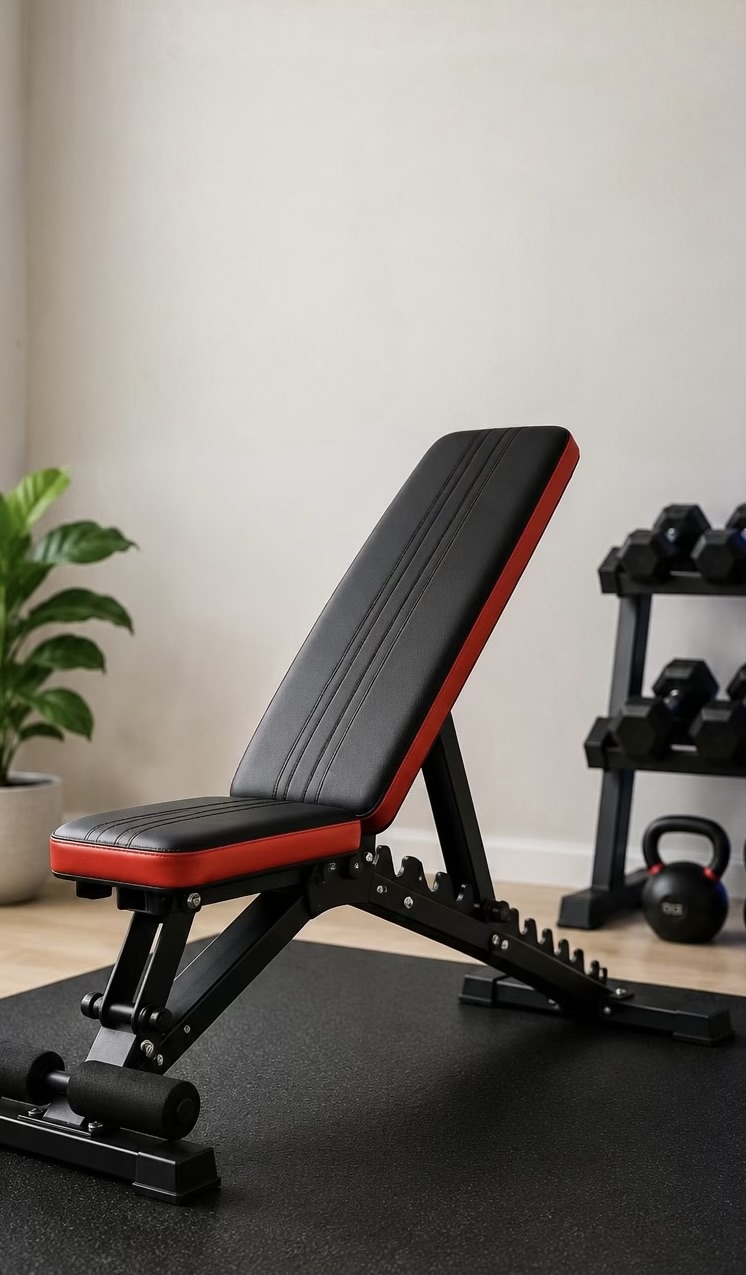
An adjustable gym bench is a weight bench that can be set to multiple angles – flat, incline, and decline – giving you far more exercise options than a fixed flat bench. The best models are described as FID benches, which stands for Flat, Incline, and Decline, meaning they cover all three positions.
Unlike a standard flat bench, which locks you into a single pressing angle, an adjustable bench lets you target different areas of your chest, shoulders, and back depending on the angle you choose. It’s one piece of equipment that does the job of many – which is exactly why it belongs in every home gym.
Most people who train at home rely heavily on dumbbells. And dumbbells are fantastic – but without a bench, you’re leaving half their potential untapped. Standing and floor exercises only take you so far. The moment you add an adjustable bench to the mix, your dumbbell training transforms completely.
Flat bench press. Incline press. Decline press. Seated shoulder press. Dumbbell rows. Bulgarian split squats. Step-ups. Incline curls. Decline crunches. Hip thrusts. The list goes on. A quality adjustable bench paired with a set of dumbbells can replicate over 80% of the exercises available in a full commercial gym – in a space no bigger than a parking spot.
This is one of the most common questions we get at SFN, and the answer is almost always the same: if you’re training at home, go adjustable.
A flat bench is more stable and has a smaller pad gap – which matters for competitive powerlifters who need to arch and drive hard off a fixed surface. But for the overwhelming majority of home gym users, the versatility of an adjustable bench far outweighs that advantage.
Here’s a simple way to think about it: For most people reading this – adjustable is the clear choice.
FID stands for Flat, Incline, and Decline. A true FID bench covers all three positions, which means you can:
Not all adjustable benches are true FID benches. Some only go flat and incline – check the specs before buying. A full FID range should go from around -15° to -30° decline all the way up to 85°–90° upright.
The market is flooded with cheap benches that wobble, squeak, and fall apart within a year. Here’s what actually matters:
Weight Capacity Your bench needs to support your bodyweight plus the load you’re lifting — with a safety margin. Look for a minimum of 600 lbs rated capacity. Higher-rated benches typically use heavier-gauge steel and better construction across the board.
Steel Gauge 11-gauge steel is the gold standard for home gym benches. 14-gauge is acceptable for lighter use. Avoid any bench that doesn’t specify its steel gauge — it usually means the frame is thinner than it should be.
Adjustment System Ladder-style adjustment systems are the fastest and most reliable. You lift the back pad and slot it into the desired position — no levers to fumble with mid-set. Pin systems are slower but still functional. Avoid benches with plastic adjustment mechanisms.
Pad Quality High-density foam with a thick vinyl cover will hold up for years. Cheap foam compresses within months, reducing both comfort and safety. Look for at least 2–2.5 inches of pad thickness.
Stability A bench that wobbles under load is a bench that’s dangerous. Look for wide base feet, rubber non-slip pads, and user reviews that specifically mention stability under heavy weights.
Footprint and Storage Many quality adjustable benches fold flat or stand vertically when not in use, cutting their footprint by 50–80%. If space is tight, this is a feature worth prioritizing.
An adjustable bench opens up your entire training program. Here are the most effective exercises by position:
Flat Position Dumbbell bench press, dumbbell fly, dumbbell pullover, tricep dips, step-ups
Incline Position (30°–60°) Incline dumbbell press, incline fly, incline curl, chest-supported row, incline skull crusher
Upright Position (85°–90°) Seated dumbbell shoulder press, Arnold press, seated lateral raise, overhead tricep extension, seated curl
Decline Position (-15° to -30°) Decline press, decline fly, decline crunch, decline row, hip thrust
Floor Use Step-ups, Bulgarian split squats, box jumps, dips (using the bench edge)
Rotate Through All Three Angles Most people buy an adjustable bench and only ever use it flat. Don’t make that mistake. Each angle targets a different part of your chest and shifts the stimulus to different supporting muscles. Rotating through flat, incline, and decline leads to more complete development and fewer overuse injuries.
Pair It With Adjustable Dumbbells An adjustable bench reaches its full potential when combined with a quality set of adjustable dumbbells. Together, they form the most powerful, space-efficient home gym setup available. Check out our top adjustable dumbbell picks.
Check Your Bench Height The IPF standard bench height is 17–17.7 inches from floor to pad. This ensures your feet sit flat on the ground during pressing, which maximizes leg drive, stability, and safety. Most quality benches hit this range – but if yours doesn’t, adjust your foot placement accordingly.
Use the Upright Setting More The 90° upright position is one of the most underused features on adjustable benches. Seated dumbbell presses, Arnold presses, and overhead tricep extensions are all more controlled and safer from a fully upright seated position than standing.
Beginners – Start simple with flat press and rows, then add complexity as your technique and strength improve. One bench grows with you for years.
Intermediate lifters – You’re ready to train multiple angles, follow structured programs, and isolate specific areas of your chest, shoulders, and back.
Home gym owners – Space and budget efficiency make an adjustable bench the obvious choice. One bench. Every angle. Zero wasted floor space.
Dumbbell-focused trainers – If your primary tools are dumbbells, an adjustable bench transforms them from 20 exercises to 80+.
People over 40 – Adjustable angles let you find positions that are joint-friendly and pain-free, making training more sustainable long term.
An adjustable gym bench is not a luxury – it’s the foundation of a functional home gym. Whether you’re just starting out or building a serious setup, the right bench gives you the angles, stability, and versatility to train your entire upper body effectively, safely, and progressively.
Choose a bench with at least 600 lbs of rated capacity, a full FID range, and a ladder-style adjustment system. Pair it with a quality set of adjustable dumbbells, and you have everything you need to build real strength at home – no gym required.
Team SFN ⭐⭐⭐⭐⭐
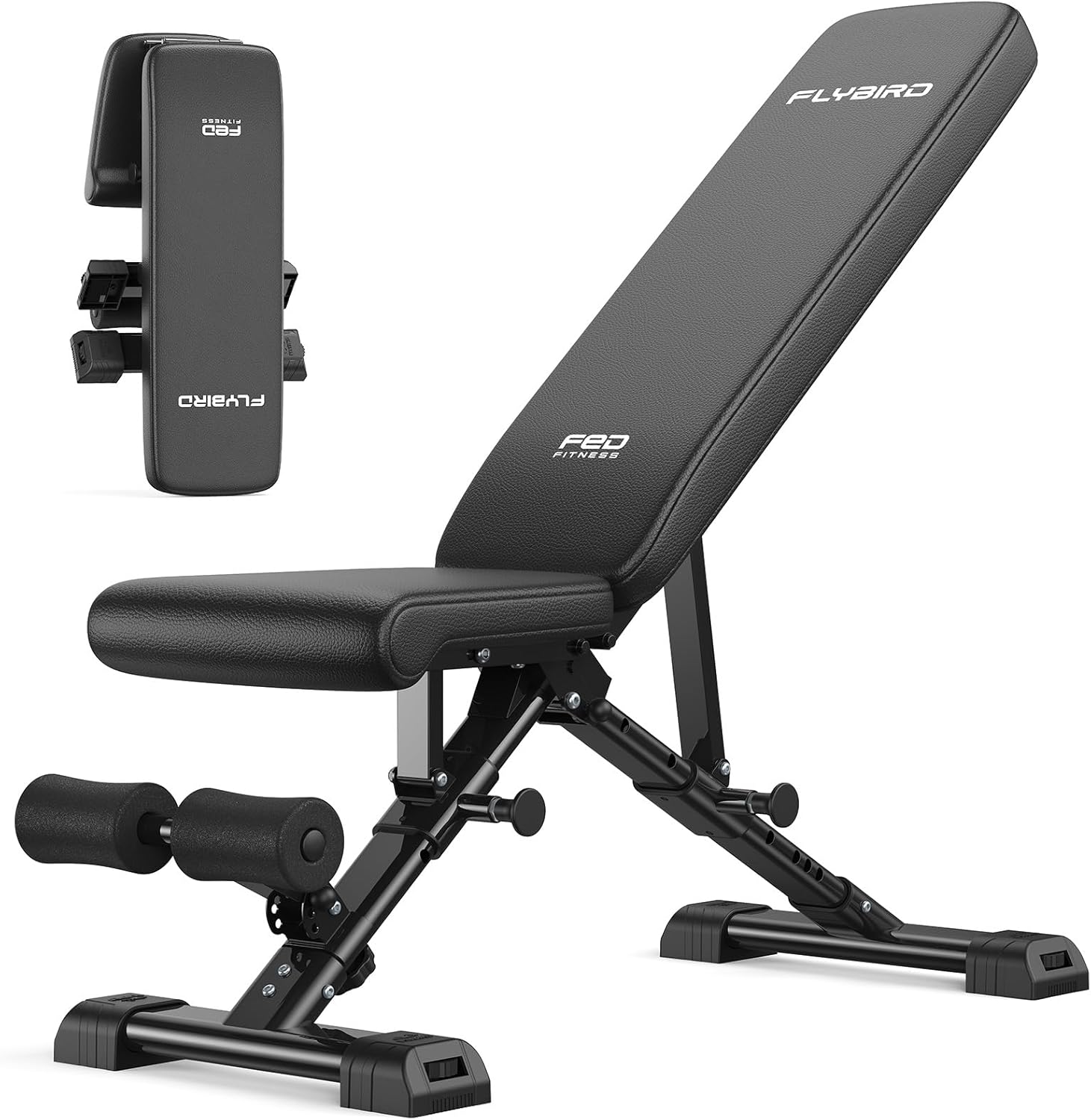
The FLYBIRD WB5 is ASTM-certified to 800 lbs and covers the full FID range from -30° decline to 90° upright. Trusted by over 100,000 users with a 4.6-star Amazon rating, and folds flat in three steps to save 80% of floor space.
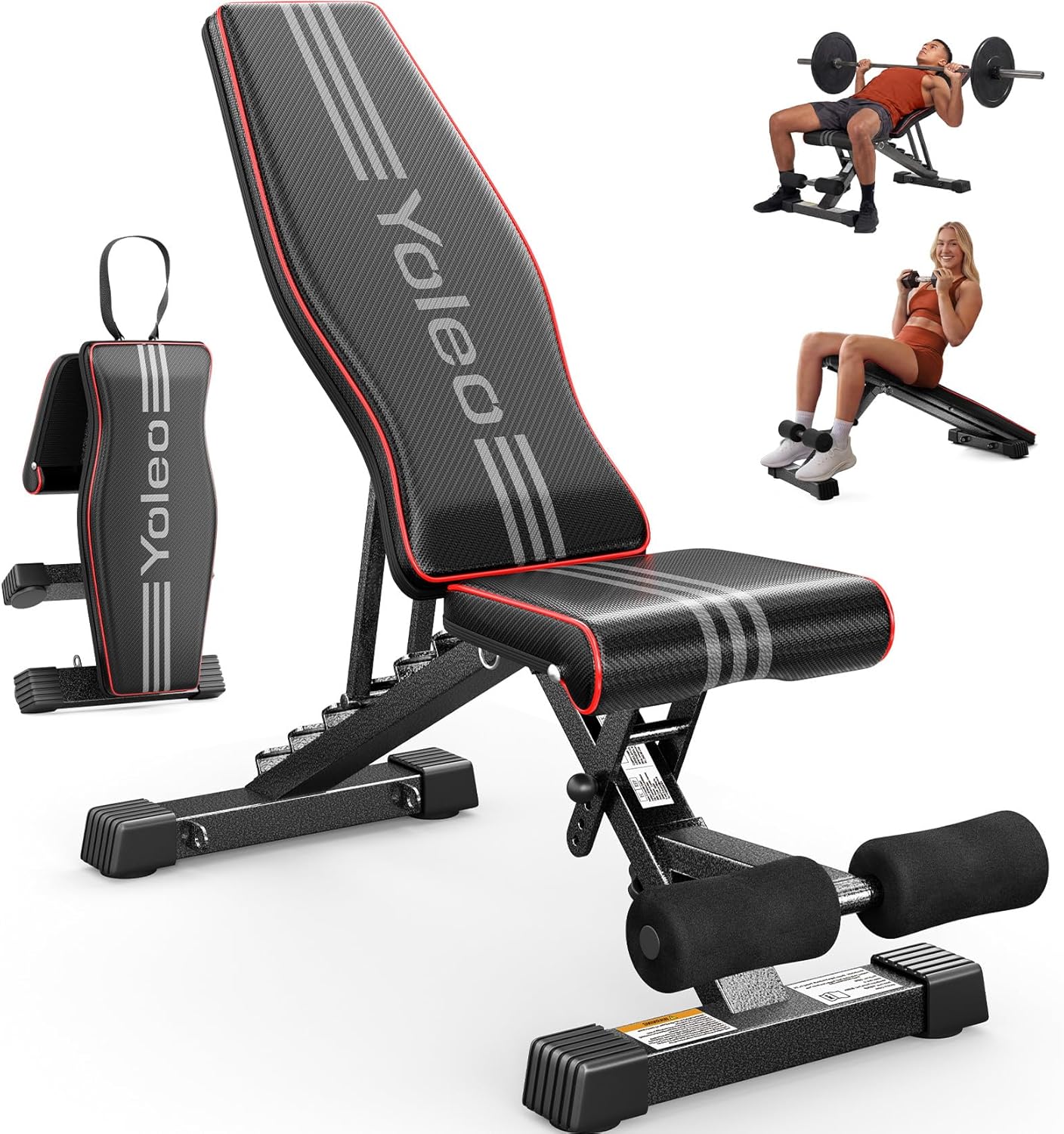
The YOLEO is Amazon's No. 1 bestselling adjustable bench, with over 20,000 sold in a single month. ASTM-certified to 827 lbs with a dual-triangle steel frame, 84 adjustment positions, and 98% pre-assembled straight out of the box. Stable, versatile, and incredible value for any home gym.
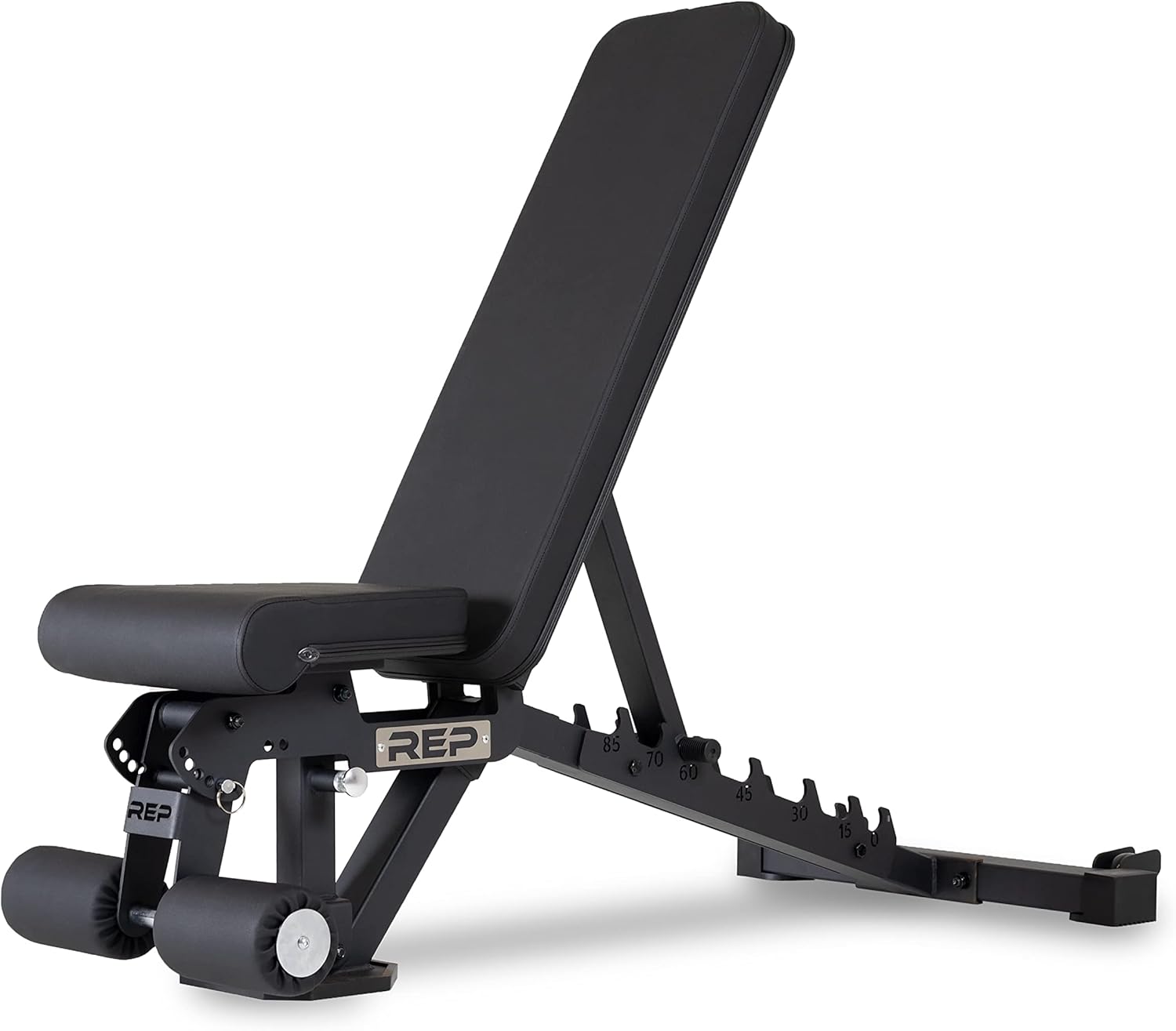
The REP AB-3000 2.0 is the gold standard for home gym adjustable benches — the top pick of virtually every serious reviewer in 2026. Built from 11-gauge steel with a 1,000 lb capacity and 8 back pad positions from full decline to upright. Zero wobble, IPF-spec height, and a CleanGrip pad that keeps you locked in on every heavy set.